
The desert of the Tartars
Abruzzo in Valerio Zurlini’s movie
28
JANUARY 2022
Dino Buzzati
Forme
Il deserto dei Tartari
There is always something absurd and confusing about dreams; one can never shake the vague feeling that it is all a lie, that at any moment one is bound to wake up.
Dino Buzzati – The Desert of the Tartars
New York, Toronto, Berlin, London, Warsaw, Munich, Dublin… There are countless initiatives around the world commemorating Dino Buzzati, the great author from Belluno who passed away on January 28, 1972. To mark this significant 50th anniversary, we wanted to gather testimonies and memories of when a small corner of Abruzzo became the set for the film adaptation of his best-known novel: The Desert of the Tartars.
The passage of time, the endless wait, an unknown yet terrifying opponent.
The worlds that Buzzati managed to create by playing on human fears and aspirations immediately captured the imagination of his readers. The story told in The Desert of the Tartars, moreover, had over time attracted the interest of many filmmakers, including Michelangelo Antonioni and Miklós Jancsó.
The story is set in a timeless realm that blends dreamlike imagery with historical memories of distant wars. The protagonist is the young officer Giovanni Drogo, who has recently been commissioned as a second lieutenant in the imperial army and ordered to reach the Bastiani Fortress (Bastiano in the film) to guard the border separating the nation from the dreaded and mysterious Tartars
Life inside the fortress is governed by strict military discipline: every day is spent waiting and preparing for the fateful clash with the enemy. This constant state of readiness is justified by the heroic feat that will be accomplished during the battle.
A battle that, however, will never take place.
The small village of Forme, in the province of L’Aquila, was chosen as the location for filming some scenes; it is located not far from one of Abruzzo’s archaeological gems,
Alba Fucens
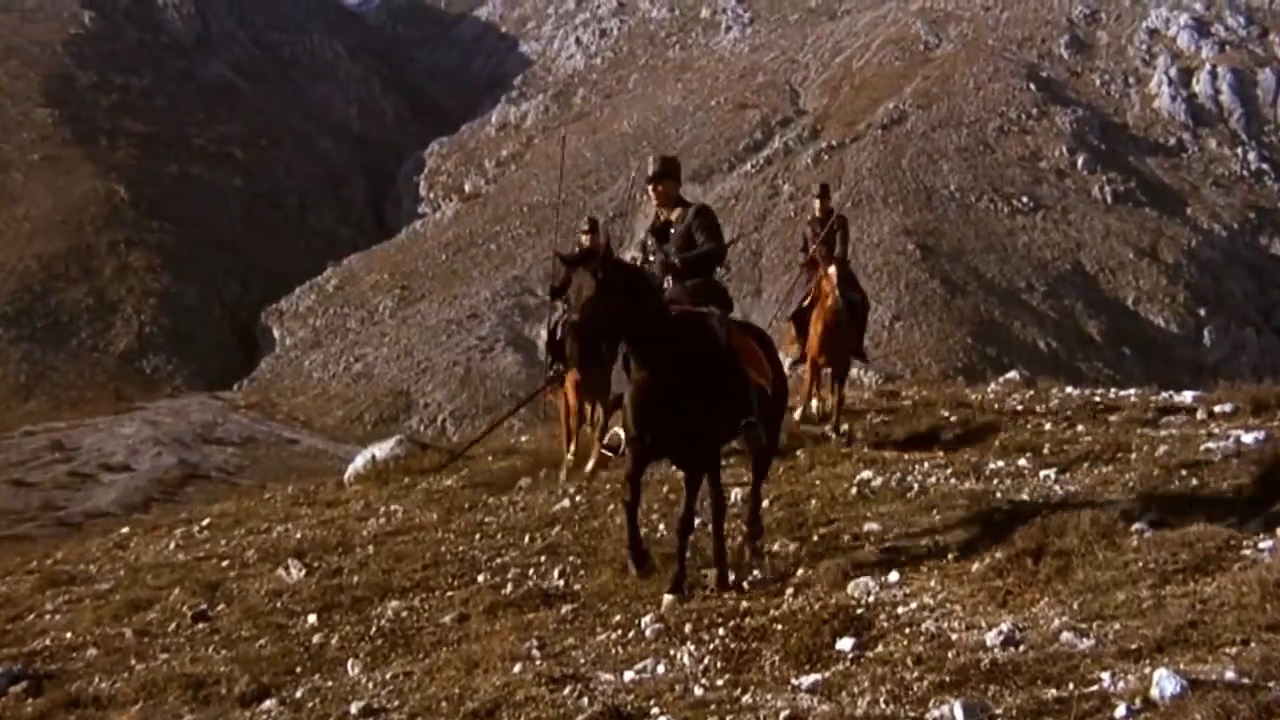
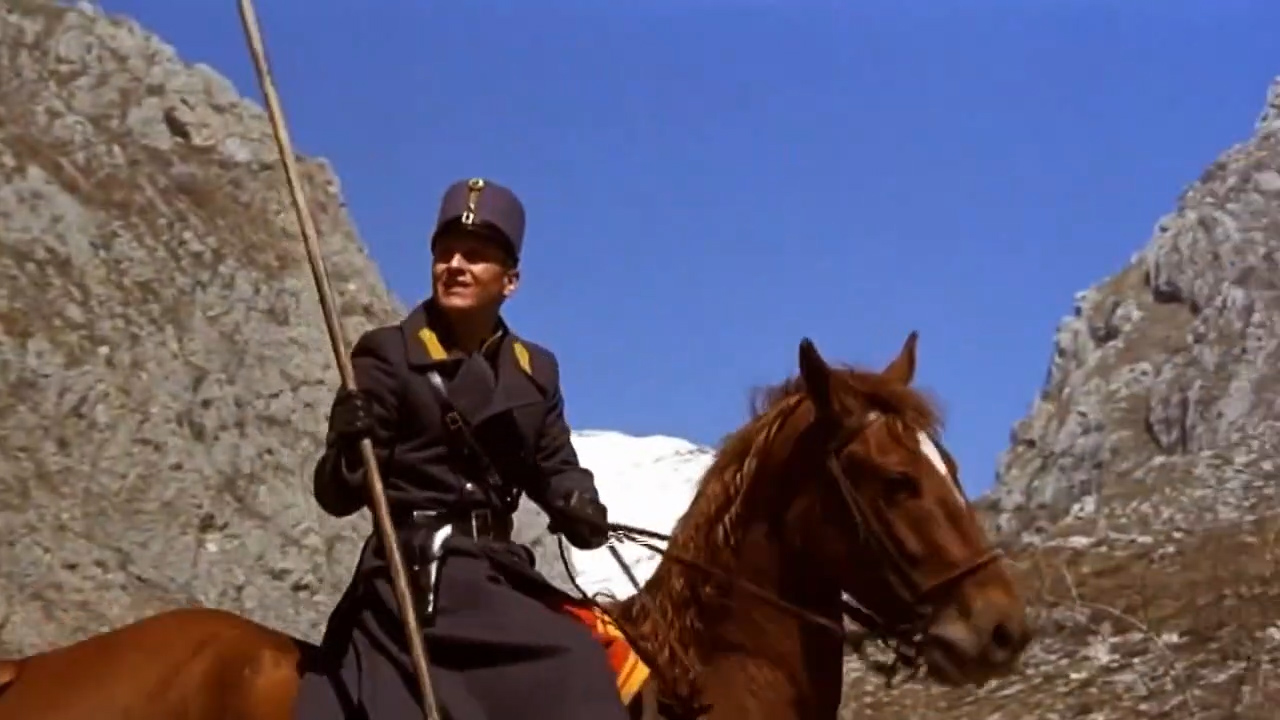

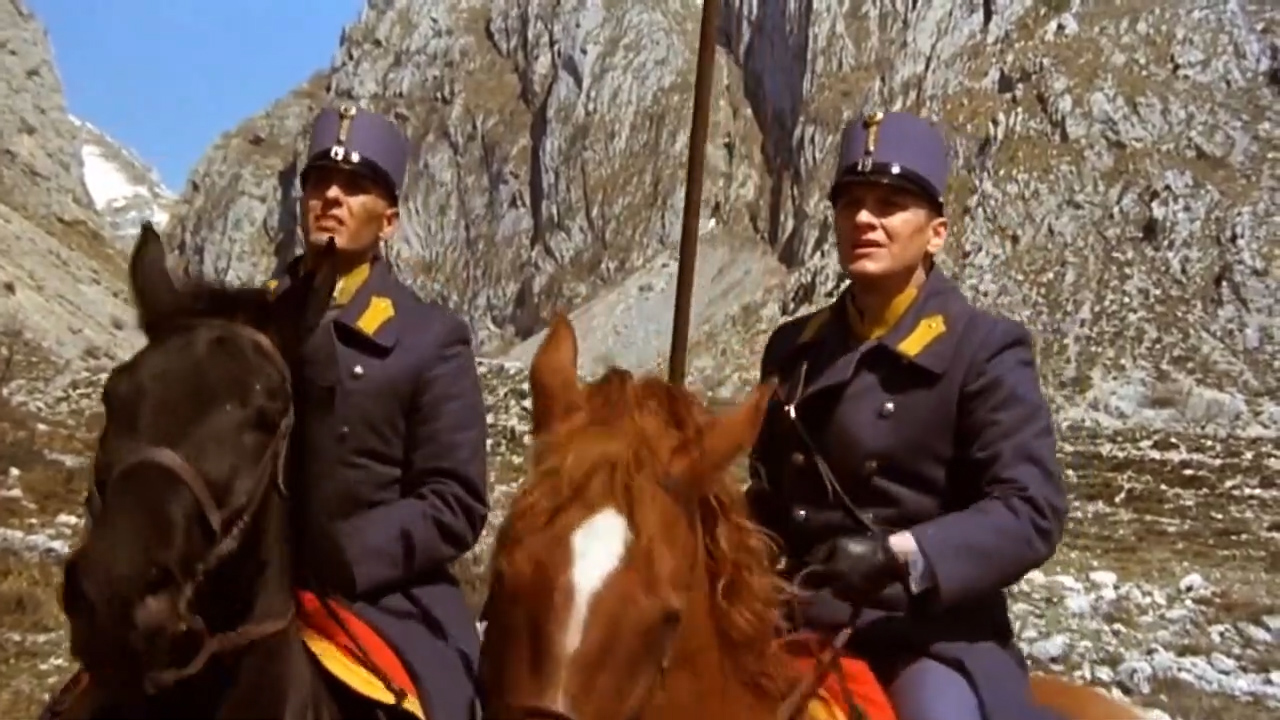
Il deserto dei Tartari (1976)
Some of the hunting scenes filmed in Forme (AQ)
“The small village of Forme, in the province of L’Aquila, was chosen as the location for filming certain scenes. It lies not far from one of Abruzzo’s archaeological gems, Alba Fucens. Thanks to the memories of one of the village’s residents, Francesco Placidi—who was a child at the time—we can get a sense of the atmosphere during those thirty days of filming.
“The landscape,” Placidi explains, “was perfectly suited for filming a hunting scene called for in the script: the area was completely untouched, full of almond trees, and offered the opportunity to shoot long takes without being interrupted by man-made elements such as poles or pylons.”
The village of Forme had already hosted a major film production when, in 1966, John Huston shot several scenes for The Bible. During those weeks, the Marsican hinterland eagerly awaited the arrival of world-renowned movie stars such as Ava Gardner and George C. Scott.

Il deserto dei Tartari
The production team of The Desert of the Tartars identified the picturesque canal in Terranera, at the foot of the Sirente-Velino mountain range, as the perfect location for filming the wild boar hunt scene. To prepare the ground for the horse race, a large number of local youths were employed to “clear” (remove the stones) from the valley. Cesidio Venanzi, who was fifteen at the time of filming, remembers very well the involvement of the young people during the shoot: “The scene was finally shot on the very last day, partly because Zurlini was getting a bit impatient. There were 12 wild boars, and they had to follow this predetermined path; I remember that I and other local kids would position ourselves at the end and had to make sure these boars went where the hunters were. Those were different times. This is to say that in the morning we’d shoot the scene, and in the evening we’d all get together at the restaurant to eat that wild boar!”
The bond between the village and the film crew was intense and deeply meaningful. Thanks to Enrico Cofini’s accounts, we know that the cast and crew were able to count on the proverbial hospitality of Abruzzo—staying in the village at the La Magnola restaurant and hotel—and on the lunch boxes prepared by his mother, Mrs. Marina Caiola, who cooked pasta with sauce, chicken, and roasts in large quantities (between 250 and 300 meals a day!).
Bruno Ricci, the film’s production manager, formed a close bond with the Placidi family, often returning to visit the father in the enchanting locations that had served as the backdrop for the film. Giuliano Gemma, Francesco recounts, had a great passion for horses, so much so that he personally arranged for the animals to be provided for many film productions, including Zurlini’s.
In the film, in fact, Gemma rode his own horse, one of the most reliable for on-screen use. Unfortunately, a serious accident befell the actor during a take: in the scene where they were chasing the wild boar, as the horse jumped over a small ravine, the spear thrown by Gemma ended up piercing the horse. According to Cofini’s recollections, it was his grandfather who stepped in to rescue the horse, drawing on his mountain experience. The actor was always grateful to the Cofini family for this act and often returned to visit the village.

Il deserto dei Tartari (1976)
The horse race filmed in Forme (AQ)
The Desert of the Tartars would be Valerio Zurlini’s final film: in his later years, the director devoted himself to teaching at the Centro Sperimentale di Cinematografia and to directing the dubbing of foreign films. The film, also known for its soundtrack composed by Ennio Morricone, won two David di Donatello Awards in 1977 for Best Film and Best Director (tied with A Very Small Bourgeois) and the Nastro d’Argento for Best Director.
“The Desert of the Tartars lies within each of us,” concludes Francesco. Just as in Buzzati’s story, even today many places—seemingly isolated in the heart of regions of immense historical and natural value—remain on the lookout for an enemy or a miracle. While the atmosphere of Zurlini’s film seems to suggest a lack of spirit, the story is deeply attuned to the fragility and fears of human beings.
In this sense, Francesco adds, the experience of the Garofano Rosso Film Festival last September in the narrow streets of the village of Forme was a true revival; it brought a burst of color and offered a warm embrace to an entire community that rediscovered its unity and enthusiasm for this new cultural event with an international flair.
Cinema has been able to open up new worlds through art. And this tribute to Dino Buzzati seems to us the best way to celebrate this joyful revival, brought to life in the beating heart of a small town rich in stories.