
Henry Mancini
From Scanno to the Oscars with Breakfast at Tiffany’s
20
JANUARY 2023
Audrey Hepburn
Henry Mancini
Colazione da Tiffany
Audrey Hepburn is undoubtedly one of the most famous actresses in the world. A two-time Academy Award winner, her name has always been associated with some of the most famous films of classic Hollywood cinema from the 1950s and 1960s, including William Wyler’s Roman Holiday (1953), Blake Edwards’ Breakfast at Tiffany’s (1961), and George Cukor’s My Fair Lady (1964).
Raised in Belgium, the United Kingdom, and the Netherlands, she made her Hollywood debut alongside Gregory Peck in 1952, playing Princess Anne in Wyler’s film, and the following year she won the Academy Award for Best Actress.
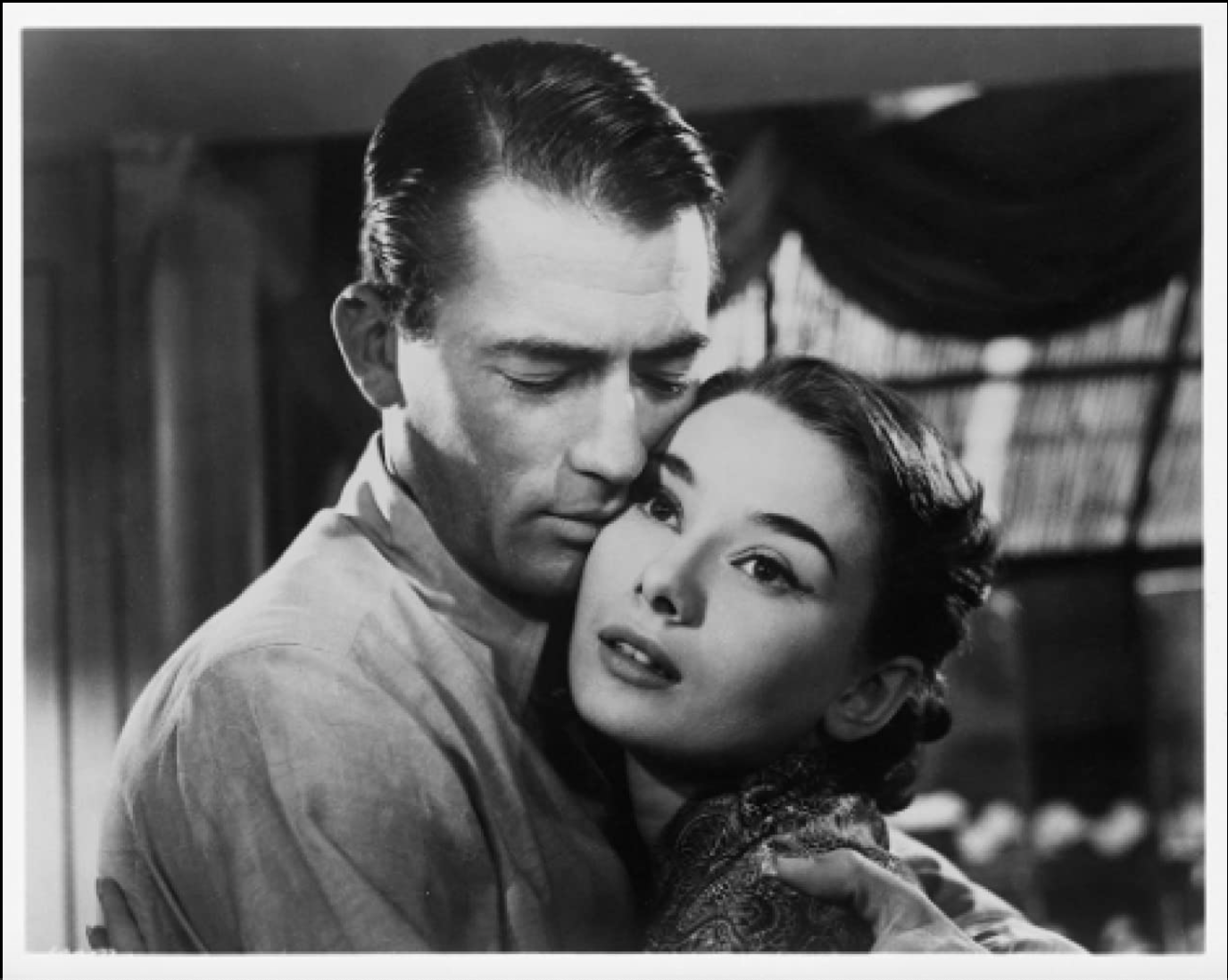
Still from Roman Holiday starring Gregory Peck and Audrey Hepburn © IMDb.com
From that moment on, she firmly established her acting career, which would make her one of the defining figures of that decade and an icon whose status remains unshakeable to this day. Her career reached its peak in 1968, when she received two Golden Globe nominations for two different films.
After numerous relationships, she married the Italian psychiatrist Andrea Dotti in 1969, and following the wedding, she decided to drastically scale back her acting commitments and devote herself entirely to her family.
Quest’anno ricorre il ventesimo anno dalla sua scomparsa, avvenuta il 20 gennaio 1993 all’età di 63 anni e nell’occasione, vogliamo ricordare la storia di Henry Mancini, un abruzzese illustre che incrociò la vita della Hepburn e che divenne poi uno dei compositori più importanti della cinematografia americana; uno dei più grandi musicisti e compositori di colonne sonore del secolo scorso, autore di brani celebri come Moon River in Colazione da Tiffany e il tema della Pantera Rosa.
This year marks the 20th anniversary of his passing, which occurred on January 20, 1993, at the age of 63. To mark the occasion, we would like to recall the story of Henry Mancini, a distinguished native of Abruzzo who crossed paths with Hepburn and went on to become one of the most important composers in American cinema; one of the greatest musicians and film score composers of the last century, the creator of famous songs such as “Moon River” from Breakfast at Tiffany’s and the theme from The Pink Panther.
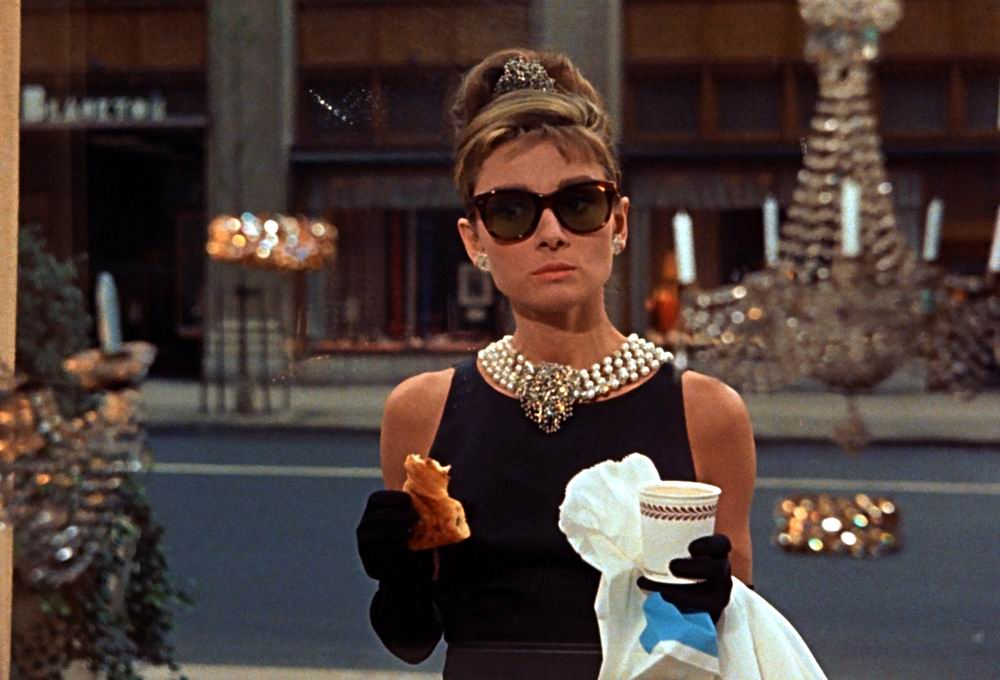
A scene from Breakfast at Tiffany’s
The protagonist, Holly Golightly, played by Audrey Hepburn, has breakfast in front of the window of a Tiffany store.
Enrico Nicola “Henry” Mancini was born on April 16, 1924, in Cleveland to Quintiliano Mancini, a native of Scanno in the province of L’Aquila, and Anna Pace, who had emigrated from Forlì del Sannio in the province of Isernia, which at the time was part of Abruzzo Ulteriore (Sulmona district).
Numerous documents by Quintiliano Mancini are still available, from which it is possible to reconstruct his long journey as an emigrant from Abruzzo to conquer the American continent.
Quintiliano was born in Scanno on March 13, 1893. The son of Adelina Ciarletta, a seamstress and weaver, and Achille Mancini, he began to show signs of restlessness with rural life as early as age 12 and contemplated emigrating. At just 17, he decided to leave and traveled to Rome, where he boarded the “Moltke” (a German transatlantic liner, later purchased by the Italian government and renamed “Pesaro”) bound for the United States of America.
On October 3, 1910, Quintiliano—known as Quinto—arrived in America along with many other Italian immigrants, disembarking at Ellis Island. Like so many of them, including those from Abruzzo, he first moved to Detroit and then, after some time, to Boston, eventually settling in Cleveland. Passionate about the recorder, he played professionally for a while, combining this passion with his main job at the steel mill; a passion for music that he would pass on to and encourage in his son Enrico.
[…] My father was a individualist. He was born in Scanno, a small town in Abruzzo. […]
For many years, I racked my brain trying to understand the reason behind that decision and how he managed to come down from the mountains, board a ship, and make it to Boston, where he worked in a shoe factory. All on his own! And all of this happened in 1910–1911.
It’s hard to believe today that twelve- or thirteen-year-old boys found their way on their own from Italy to the United States without any money and somehow managed to survive. Yet that’s exactly what happened. My father was one of those boys. He had always been independent and, in some ways, not very Italian. While other parents were fighting to get their children into the steel mills, my father wanted me to stay away from them.
Did they mention the music?, biography of Henry Mancini
Enrico Mancini, later renamed Henry, developed a passion for music at the age of 8 and began studying the piccolo. At age 12, he began taking piano and composition lessons with the Florentine maestro Mario Castelnuovo-Tedesco, and after finishing high school, he moved to New York to attend the prestigious Juilliard School. He never completed his studies because he was drafted into the army and sent to Europe due to World War II.
After the war, he was hired as a pianist in Glenn Miller‘s prestigious orchestra, and it was thanks to this significant experience that he was hired by the music department at Universal Pictures in 1952.
His second film with the studio, The Glenn Miller Story (1954), was nominated for an Academy Award for Best Original Score in 1955.
His definitive breakthrough in the film world, however, came through his ongoing collaboration with director Blake Edwards, which began in 1959 with Operation Petticoat; over the course of his long career, he would compose the music for no fewer than 27 of Edwards’ films over a span of more than 30 years.
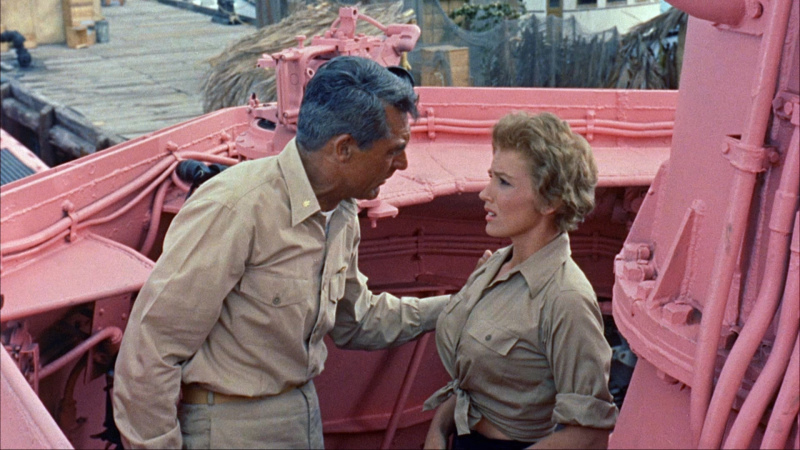
Still from Operation Petticoat: Cary Grant and Marion Ross aboard a pink submarine
Henry Mancini is universally regarded as one of the greatest film score composers. In addition to Edwards, he collaborated with internationally renowned directors such as Orson Welles, Howard Hawks, and Vittorio De Sica, composing the scores for cinematic masterpieces including: The Creature from the Black Lagoon (1954), Touch of Evil (1958), Breakfast at Tiffany’s (1961), The Pink Panther (1963), and The Pink Panther Strikes Again (1975).
In oltre quarant’anni di carriera nel cinema, Henry Mancini firmò le musiche di oltre cento film e vinse quattro statuette dell’ Academy Awards su 18 candidature, due delle quali per il film tratto dal romanzo di Truman Capote Colazione da Tiffany: Miglior Canzone (Moon River) e Migliore colonna sonora.
Over the course of his more than forty-year career in film, Henry Mancini composed the music for over a hundred films and won four Academy Awards out of 18 nominations, two of which were for the film adaptation of Truman Capote’s novel Breakfast at Tiffany’s: Best Original Song (“Moon River”) and Best Original Score.
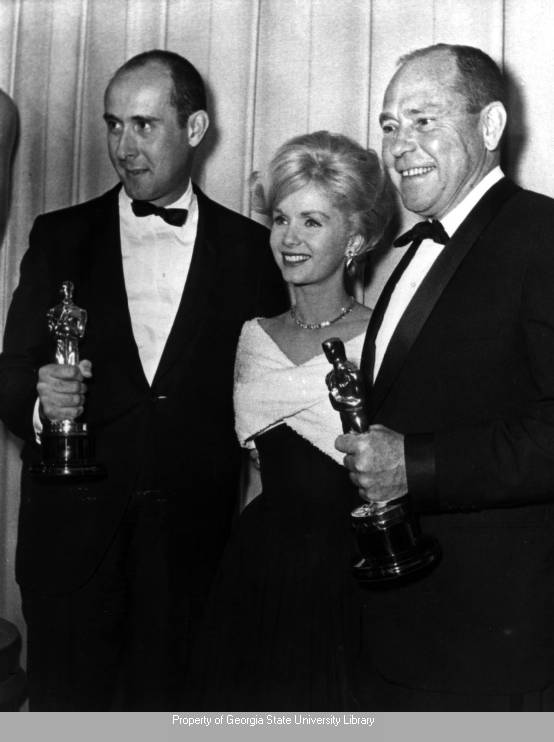
Henry Mancini, winner of the 1963 Academy Award for Best Original Song (“Days of Wine and Roses”) for Days of Wine and Roses
© Georgia State University Library
In addition to his accolades in the film industry, Henry Mancini also won 20 Grammy Awards and two Emmy Awards over the course of his career, released more than 50 albums—selling over 300 million copies worldwide—and composed over 500 songs. His relentless output made him one of the most prolific American composers, so much so that in 2004, the U.S. government issued a commemorative stamp in his honor depicting Mancini conducting an orchestra with the Pink Panther pointing up at him from below, while in Scanno (AQ), only recently (2017), the town’s main street was named in his memory.

2004 Henry Mancini stamp (0.37 cents) © USPS – Wikipedia

Samuele Coccione
An exile by necessity, but mostly out of masochism.
I love movies, books, and boredom.
I’ve been writing about Abruzzo cinema ever since it was “cool”
to be stuck at home.
I live in Milan, but I dream of working remotely with my feet soaking in the Tirino River.