
Gianni Di Venanzo
The man from Abruzzo who invented light
18
DECEMBER 2022
Gianni Di Venanzo
Director of photography
102nd anniversary
Director of photography for Michelangelo Antonioni, Federico Fellini, Francesco Rosi, Carlo Lizzani, and Elio Petri. A pioneer of black-and-white cinematography and winner of five Nastri d’Argento awards for cinematography. Cinematographer of masterpieces that made Italian cinema one of the most important in the world in the 1960s, such as: Mario Monicelli’s I soliti ignoti, Michelangelo Antonioni’s Il grido, La notte, and L’Eclisse, and Federico Fellini’s 8½. All of this, to attempt a humble and brief summary of an entire life, is Gianni Di Venanzo.
A native of Teramo, he was one of the greatest cinematographers; sadly, he passed away at the young age of 46 and is now all but forgotten, except among industry insiders. We are talking about a genius, a master of Italian cinema whose influence is still visible today in the films of the world’s greatest filmmakers; a man from Abruzzo forgotten by history, whom we wish to honor today, on the eve of the 102nd anniversary of his birth.
Gianni Di Venanzo was, at the time, the greatest Italian cinematographer and, as such, one of the greatest in the world. The cinematography in The Basilisks is very important; it makes up a large part of the film. It was all quite an adventure.
Lina Wertmüller on Gianni Di Venanzo, director of photography for the film The Basilisks (1963)

A still from Federico Fellini’s 8½

A still from Quentin Tarantino’s Pulp Fiction
Feliciano (known as Gianni) Di Venanzo was born in Teramo on December 18, 1920, to Domenico Di Venanzo and Luigina Trinietti. Passionate about cinema from a very young age, he waited until he turned eighteen to move to Rome and enroll at the Experimental Center of Cinematography, where he graduated in 1940.
He quickly became an assistant cameraman and learned the ropes on the job during a period of profound political upheaval and a shift in filming techniques and aesthetic sensibilities.
Shortly after beginning his career as an assistant cameraman, he was drafted into the army, but he was still able to continue working in his profession after being assigned to the army’s film unit.
During this period, he worked on the filming of Luchino Visconti’s Ossessione in 1943, and after the liberation of Rome, he appeared in two films by Roberto Rossellini: Roma città aperta in 1945 and Paisà in 1946.
Following this period of artistic and technical training—which we now know coincided with the birth of Italian Neorealism and thus the zenith of stylistic and narrative innovation of the time—Gianni Di Venanzo was promoted to camera operator and accompanied photographer Aldo Graziati, then director of photography, on Visconti’s Sicilian adventure: La terra trema (1948). Later, again with Aldo as director of photography, he participated in the filming of Vittorio De Sica’s Miracolo a Milano in 1951.
In 1951, after seeing a screening of Visconti’s La terra trema, Carlo Lizzani decided to hire Gianni Di Venanzo and promote him to director of photography on his film about the partisan resistance, Achtung Banditi!, which was financed by 500-lire contributions from a cooperative of Genoese workers.
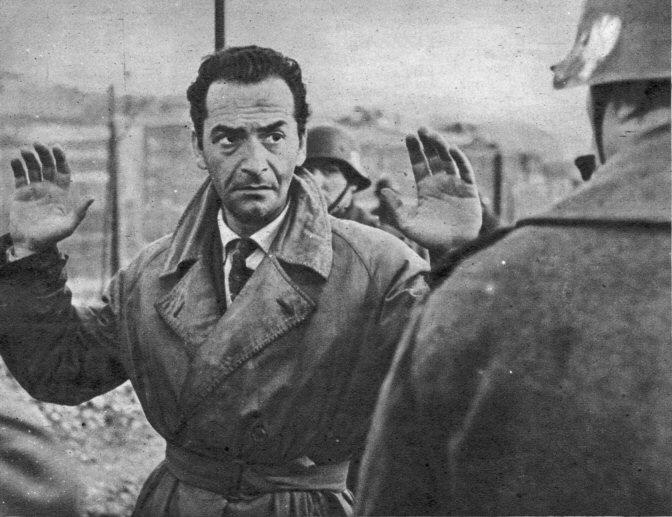
A still from the film Achtung Banditi! by Carlo Lizzani (1951)
Following this film, Lizzani once again tapped him to serve as director of photography for his film Ai margini della metropoli (1952) and later for a 1953 anthology film that would mark a true turning point in Di Venanzo’s career: Amore in città; a film co-directed by Carlo Lizzani, Alberto Lattuada, Michelangelo Antonioni, and Federico Fellini. It was here that Gianni Di Venanzo met the directors with whom he would collaborate over the next ten years of his brief but intensely productive career.
In 1954, he collaborated once again with Carlo Lizzani on Cronache di povere amanti, while in 1955 he worked for the first time with Michelangelo Antonioni on the film Le amiche. Following this experience, he was introduced to Francesco (known as Citto) Maselli, Antonioni’s assistant director, who was preparing to make his directorial debut with his own feature film. So, later that same year, he filmed Gli sbandati with Maselli, another incredible film about the partisan resistance.
Di Venanzo was a genius, and that was the foundation. He never read a movie script. He’d show up and say, “Listen, I was tired last night, and I just couldn’t bring myself to read it.” […] In any film, in every new setting, in every new scene, it was as if he were starting from scratch, rejecting every kind of convention and preconceived formula. And that was his defining characteristic.
On top of that, he had a hellish temper, as everyone knows, because he certainly had a rather complex professional history, as is the case with a whole generation of Italian filmmakers of extremely humble, extremely poor origins, without even a minimal education that would allow them to approach the things they wanted to do in a systematic way, and with a certain rage that was more than natural and understandable, due to their own secret, extremely difficult, and exhausting way of understanding and approaching creativity.
Francesco “Citto” Maselli on Gianni Di Venanzo
Between 1955 and 1960, Gianni Di Venanzo collaborated with directors of the caliber of Antonio Pietrangeli, Valerio Zurlini, Vittorio Gassman in his directorial debut, and Mario Camerini, and established or strengthened a strong artistic partnership with two great filmmakers who would definitively establish themselves in the following decade: Michelangelo Antonioni (with whom he shot Il grido in 1957) and Francesco Rosi (with whom he shot La sfida in 1958).
In 1961, Gianni Di Venanzo served as director of photography on Antonioni’s La notte, starring Marcello Mastroianni and Monica Vitti.
This is perhaps the film in which the potential of black-and-white cinematography is brought to its fullest expression, and Di Venanzo’s cinematography reaches one of the early pinnacles of his career, creating an iconic film with shots that have become legendary—a timeless film; a true masterpiece.

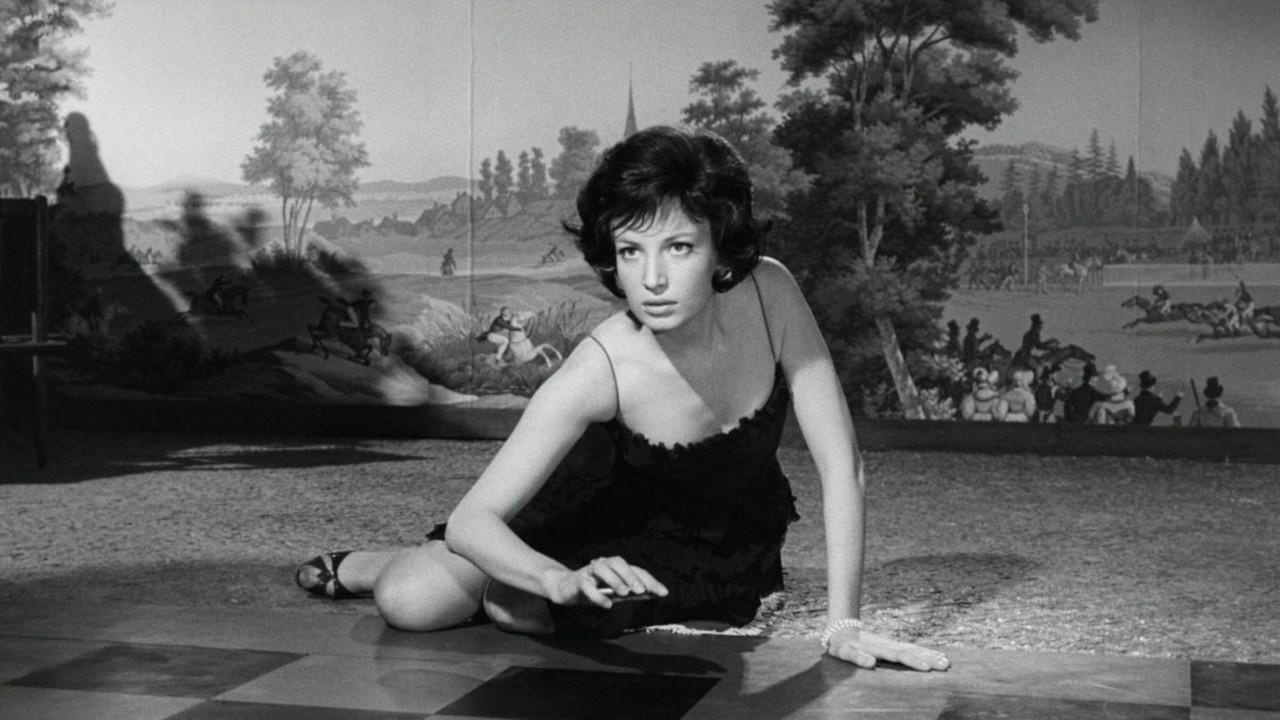

Stills from La Notte by Michelangelo Antonioni
Dear Gianni, when you captured the light on faces, landscapes, and objects, it was always just right because you were the one who created it; your light—which was an expression of your sensitivity—conveyed a mood, a situation, drama, comedy, happiness, despair, laughter, and tears; everything. Your lighting in Michelangelo Antonioni’s *La Notte* was almost more powerful than words and brought vitality to the characters, the settings, and the emotions.
A Letter from Monica Vitti. A Remembrance of Gianni Di Venanzo
The 1960s, which began with Antonioni’s masterpiece, would mark the high point of Gianni Di Venanzo’s career. It was during that decade, in fact, that he was definitively established as a “baron of Italian cinema, one of the princes of cinematography.” Between 1961 and 1965, he solidified his relationships with the legendary directors with whom he had begun his career—such as Carlo Lizzani, Michelangelo Antonioni, Francesco Rosi, and Francesco Maselli—with whom he collaborated on the cinematography for Il carabiniere a cavallo (1961), L’eclisse (1962), Salvatore Giuliano, and Gli indifferenti (1964), and he began a new and fruitful collaboration with another titan of the era: Federico Fellini.
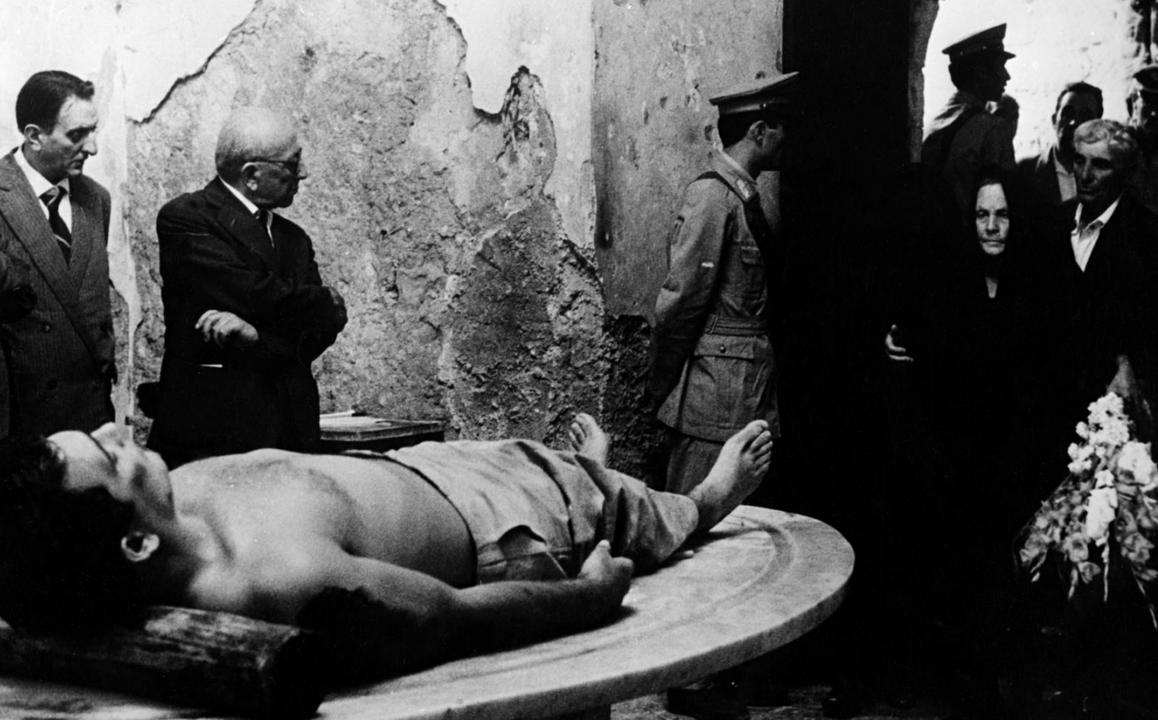
A still from Salvatore Giuliano by Francesco Rosi, the film that won the Silver Bear for Best Director at the Berlin Film Festival in 1962
In 1963, Federico Fellini chose Gianni Di Venanzo to serve as director of photography for his film 8½, which he co-wrote with another Abruzzese figure from the worlds of Italian cinema and literature: Ennio Flaiano.
(If you missed the previous article, which was about Ennio Flaiano, you can read it here)
Generally speaking, the director sets the visual tone of a film. […] Franco Rosi, for example, actually shows me photographs to indicate what he wants me to frame and how. With Fellini, things are a little more complicated. […]
I had a lot of doubts at first. After the first week, I wanted to quit. We actually started shooting indoors. The result wasn’t what Fellini wanted, and that threw me into a crisis, but Fellini was extremely understanding. […] He helped me rethink some of my approaches; by doing exactly what he asked of me, I achieved a result that I believe satisfied him.
Gianni Di Venanzo in “Bianco e nero,” No. 4, April 1963
Following this experience, Federico Fellini was eager to collaborate with Di Venanzo again and offered him the chance to serve as director of photography on his next film, Juliet of the Spirits, in 1965. It is one of the few films in which the Teramo-born cinematographer experimented with color.
A master of black-and-white, Di Venanzo had few opportunities to work with color because he died shortly after the film’s completion at the age of 46.
For Juliet of the Spirits, he was posthumously awarded a Nastro d’Argento for cinematography in 1966, adding to the four he had previously won for The Scream (1958), I magliari (1960), Salvatore Giuliano (1960), and 8½ (1964), making Gianni Di Venanzo one of the most awarded Italian cinematographers of all time.
Di Venanzo was extraordinary even when filming under extremely difficult conditions, as was the case, for example, with *La legge è legge*. He died a senseless death because he neglected himself and didn’t take care of his health. “My liver hurts,” he used to say, and that’s exactly what killed him. All he needed to do was take good care of himself for a year!
Gianni Di Venanzo in “Bianco e nero”, n.4 aprile 1963

A still from Federico Fellini’s Juliet of the Spirits
Even though it takes a toll on my family and my physical well-being, I can’t stop—if I stop, I feel terrible. This job is my life; working is how I relax.
Gianni Di Venanzo

Samuele Coccione
An exile by necessity, but mostly out of masochism.
I love movies, books, and boredom.
I’ve been writing about Abruzzo cinema ever since it was “cool”
to be stuck at home.
I live in Milan, but I dream of working remotely with my feet soaking in the Tirino River.